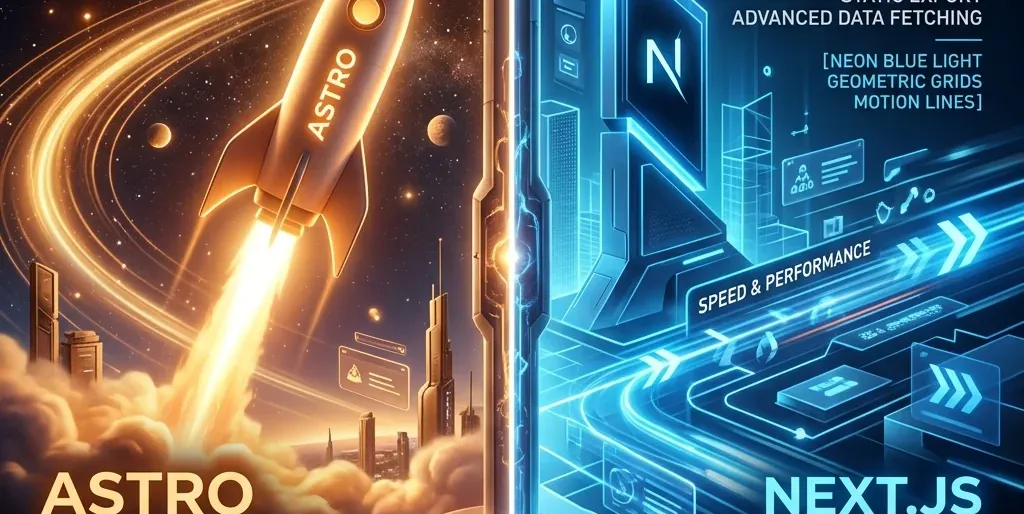
The Framework Dilemma
Choosing the right framework for your project can feel overwhelming. Two of the most popular options in 2025 are Astro and Next.js — but they serve fundamentally different purposes. Let’s break down when to use each.
Architecture Philosophy
| Aspect | Astro | Next.js |
|---|---|---|
| Rendering | Static-first, islands | Server-first, hybrid |
| JS Shipped | Zero by default | Full React runtime |
| Framework Lock-in | Framework-agnostic | React-only |
| Best For | Content sites, blogs | Web applications |
| Learning Curve | Low | Medium-High |
Astro: The Content Champion
Astro shines when your priority is performance and content delivery:
---
// This runs at build time — zero JS shipped!
const posts = await getCollection('blog');
const latest = posts.sort((a, b) => b.data.date - a.data.date);
---

<ul>
  {latest.map(post => (
    <li>
      <a href={`/blog/${post.slug}`}>{post.data.title}</a>
    </li>
  ))}
</ul>
Key benefits:
- Ships zero JavaScript by default
- Use React, Vue, Svelte, or any framework as “islands”
- Built-in content collections with type-safe frontmatter
- Exceptional Lighthouse scores out of the box
- MDX support with customizable components
Next.js: The Application Powerhouse
Next.js is the go-to when you need a full-featured web application:
// Server Component — runs on the server
async function Dashboard() {
  const data = await fetchDashboardData();

  return (
    <div>
      <h1>Dashboard</h1>
      <InteractiveChart data={data} /> {/* Client component */}
      <RealtimeNotifications /> {/* Client component */}
    </div>
  );
}
Key benefits:
- Server Components for optimal performance
- API routes for backend logic
- Middleware for authentication and routing
- Image optimization built-in
- Massive ecosystem and community
Performance Comparison
In my testing with similar portfolio sites:
Metric          | Astro      | Next.js
----------------|------------|----------
First Load JS   | 0 KB       | ~85 KB
LCP             | 0.8s       | 1.4s
TTI             | 0.9s       | 2.1s
Build Time      | 2.3s       | 8.7s
Lighthouse | 100/100 | 92/100Note: These numbers are from my specific use case (portfolio site). Next.js performance improves significantly with Server Components and proper optimization.
When to Use Astro
Choose Astro if you’re building:
- Portfolio websites (like this one!)
- Blogs and documentation sites
- Marketing pages and landing pages
- E-commerce catalogs with minimal interactivity
- Any project where content is king
When to Use Next.js
Choose Next.js if you’re building:
- SaaS applications with complex state management
- Dashboards with real-time data
- E-commerce platforms with cart, checkout, and authentication
- Social platforms with heavy user interaction
- Any project where interactivity is primary
My Verdict
For this portfolio, I chose Astro because:
- Content is the primary focus
- Near-zero JavaScript means faster page loads
- MDX support for rich blog posts
- Island architecture lets me use React where needed
- The build output is smaller and more efficient
But I use Next.js daily for client projects that need full-stack capabilities. They’re not competitors — they’re complementary tools in your toolkit.
Conclusion
The best framework is the one that fits your specific use case. Don’t follow hype — analyze your project’s needs:
- Mostly static content? → Astro
- Highly interactive app? → Next.js
- Need both? → Consider Astro with React islands
What framework do you prefer? Let me know on LinkedIn!